Points of interest…
- Intensive summer camps can match 12 months of traditional therapy in weeks.
- JMU's Scottish Rite Camp has offered free services for over four decades.
- Graduate students gain rapid clinical hours while filling summer service gaps.
Discover how university-based camps provide free, intensive therapy for children while giving graduate SLP students hands-on clinical experience.
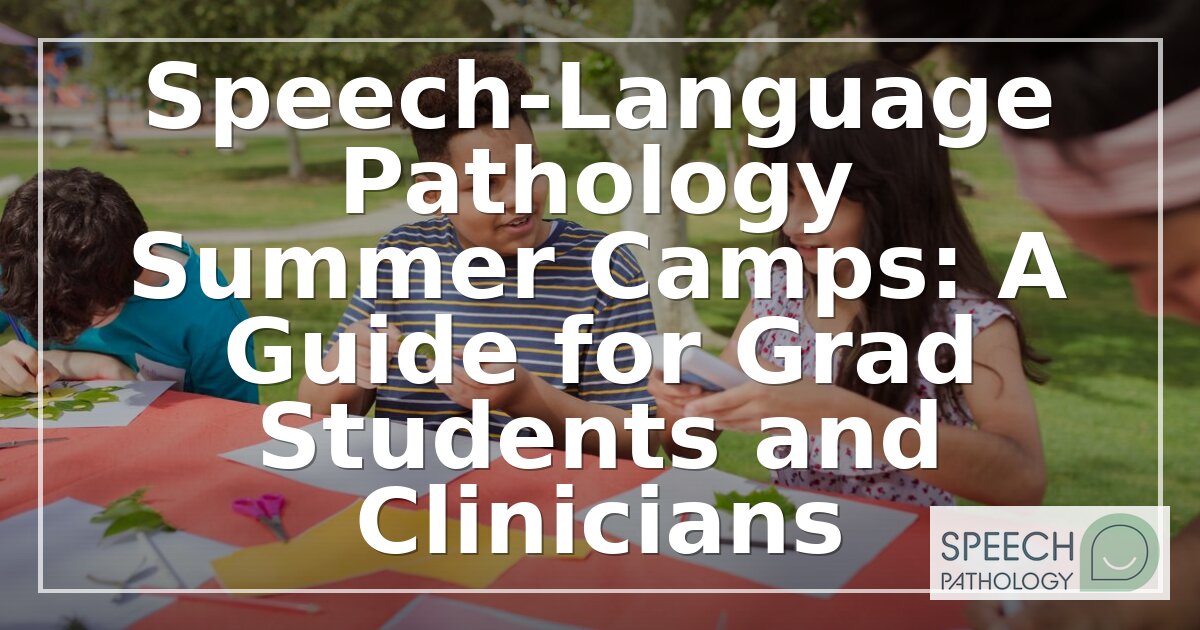
What exactly happens at a speech-language pathology summer camp? In short, it’s an intensive, structured program that delivers speech and language therapy during the weeks when school-based services pause. These camps serve a dual mission: children with communication disorders receive high-dose intervention to maintain and accelerate progress, while graduate SLP students log concentrated clinical hours, meeting clinical hours requirements under expert supervision. For many families, summer break can erase months of school-year speech gains; for graduate clinicians, a camp-based practicum replaces observation with hands-on responsibility at a pace no semester-long placement can match.
The central tradeoff for families of children with speech-language disorders is that progress made during the school year can quickly unravel over summer break, when structured speech-language services stop. SLP summer camps flip that dynamic by packing weeks of high-dose therapy into a fun, immersive setting, often at little or no cost, ensuring children not only maintain their skills but accelerate gains while school-based support is paused.
Research consistently shows that intensive, high-frequency treatment over a condensed period can produce outcomes equal to or better than weekly sessions spread across a full year. SLP summer camps deliver daily or near-daily intervention, compressing months of typical dosage into a few weeks. This concentrated schedule builds motor patterns and linguistic habits more efficiently, and it directly counters the “summer slide”: the documented loss of communication skills that occurs when children take an extended break from structured therapy. By continuing intervention through the break, children return to school in the fall better equipped and often at a higher performance level than when they left.
Unlike pull-out therapy in a school hallway or clinic room, camp environments embed communication practice into real social interactions. Children work alongside peers who face similar challenges, which normalizes their experience and fuels motivation. They practice turn-taking, topic maintenance, and nonverbal cues during meals, games, and group projects, not just in structured drills. This constant peer interaction accelerates generalization: a child who masters a new sound in a therapy office can immediately try it with a new friend at the crafts table. The naturalistic setting also supports pragmatic language goals, as clinicians guide conversations in real time and help campers navigate the unscripted social demands of a group.
Many camps design programming around particular communication profiles. A camp may use a motor-speech intensive model for childhood apraxia of speech, incorporating repetitive practice disguised as relay races and song activities. Camps focused on stuttering and cluttering often blend fluency shaping with confidence-building, while language-delay programs weave vocabulary and syntax targets into storytelling and dramatic play. For autistic children, an autism speech therapy approach incorporates sensory-friendly routines and visual supports, with speech goals targeted during highly preferred activities. These evidence-based, play-centered methods keep children engaged, which research links to better retention and carryover.
A significant barrier to summer speech services is cost, yet many SLP summer camps are offered free of charge or at deeply reduced rates, often underwritten by philanthropic organizations, universities, or grants. This removes financial pressure from families and widens access to intensive intervention that would otherwise be unattainable.
We provide an intensity of service and experience that they just wouldn't get otherwise.
Graduate speech-language pathology summer camps offer a concentrated, real-world learning environment that bridges the gap between classroom theory and clinical practice. Unlike traditional semester-long placements, camps immerse students in an intensive therapy setting over a few weeks, creating a rapid skill-building experience.
At most camps, graduate student clinicians take on direct therapy roles under close supervision. You might lead individual sessions, co-treat with a peer, or manage small groups. Typical responsibilities include planning and executing therapy activities, collecting detailed session data, writing progress notes, and communicating with families. At programs like the JMU Scottish Rite Camp, each child is paired with a graduate clinician for the duration of the camp, giving you consistent, one-on-one experience with the same client across multiple sessions.
Supervision structures in SLP clinical supervision are designed for maximum support and growth. Ratios often range from 1:1 to 2:1 (students per supervisor), with on-site clinical educators providing real-time feedback. This aligns with ASHA’s standard that at least 25% of your direct clinical hours must be supervised.1 Immediate, in-the-moment coaching helps you refine cueing strategies, adjust session pacing, and quickly correct any techniques that aren’t working. That close mentorship means you’re constantly learning and improving session by session.
Practicum hours you earn at an SLP summer camp can typically be applied toward the 400 clock hours required for ASHA certification and your university’s clinical practicum requirements. Many programs formally count camp participation as a SLP clinical placement, granting academic credit. Even if your program doesn’t offer credit, the hours still accumulate toward your overall total. Check with your clinical director to confirm how your camp experience maps to specific knowledge and skills (KASA) standards.
The camp format provides a unique mix of high-frequency sessions and diverse case work. Over just four or five weeks,4 you might work with children who have childhood apraxia of speech, stuttering, language delays, or autism. This breadth and intensity can accelerate your diagnostic and therapeutic skills far faster than a typical weekly placement. Former camp clinicians often report emerging with newfound confidence in SLP clinical placements and specialized techniques. For example, graduates who attend stuttering camps such as Camp Words Unspoken describe mastering fluency-shaping protocols they rarely saw in routine practicum,3 while apraxia-focused camps help clinicians become adept at evidence-based motor speech approaches.2 It’s not uncommon to hear that a summer camp experience became the single most transformative piece of a student’s training.
No single camp format fits every family, and the differences between residential, day, and virtual models shape both the clinical intensity children receive and the training grad students get out of it.
Residential camps ask families to send a child away for several days of round-the-clock programming, often blending speech and language goals with recreational or career-exploration activities. Misericordia University's Summer Career Exploration Camp1 is one example: a four-day residential program with a modest fee (around $125) built around career exposure alongside communication-focused activities. For grad students, residential settings offer extended contact hours with a single child or small group, which can deepen rapport and allow clinicians to observe carryover of skills into unstructured, camp-life moments rather than just a therapy room.
Day camps are far more common and typically run for a set block of hours over one to three weeks. Lebanon Valley College's SLP camp2 and Texas Woman's University's Literacy Camp and Preschool Articulation, Language and Literacy Camp3 both follow this half-day, multi-day model, with morning sessions that let children return home each afternoon. Saint Elizabeth University's SLP camp4 follows a similar weeklong day structure. This model suits families who cannot commit to overnight care or who live close enough to commute, and it gives students repeated, shorter practice cycles across many sessions, helping them accumulate slp clinical hours grad school rather than one long immersive block.
Virtual camps have expanded access considerably, especially for specialized needs like childhood apraxia of speech. Programs such as Apraxia Bootcamp Online5 use structured, evidence-informed approaches like Rapid Syllable Transition treatment over a several-week span, while university-run virtual offerings, including the University of North Texas's Teenage Talk Team and Ready, Set... programs6, target specific age groups and goals like social language or college readiness. Other virtual formats serve parents and professionals directly rather than children.7 These programs remove geographic barriers but rely on caregiver support and stable technology; student clinicians must adapt their in-person skills to screen-based cueing and engagement, much like in an SLP telepractice setting.
Each model serves a different mix of severity, family logistics, and access needs, so the right fit is often a family, not a universal, decision.
Finding the right speech-language pathology summer camp requires a strategic search across multiple channels, as no single national registry captures every available program. University clinics, state associations, school districts, and community organizations each maintain their own offerings, often with limited cross-promotion. Knowing where to look and how to verify program quality can save families and prospective student clinicians significant time.
Many university communication sciences and disorders departments operate summer camps through their on-campus clinics. These programs frequently specialize in particular populations or disorder types. Some focus on childhood apraxia of speech, while others target autism spectrum disorder, stuttering, or developmental language delay. To find these opportunities, visit the websites of universities with accredited SLP graduate programs in your region. Look for pages titled "community clinics," "outreach programs," or "summer services." If no camp is listed online, contact the clinic directly, as some programs are promoted only through local referral networks.
State professional associations often compile member-offered programs, including summer camps and intensive therapy sessions. Organizations in larger states such as Texas, California, Florida, and New York typically maintain resource directories or event calendars listing regional opportunities. These associations may also publicize camps run by hospitals, private practices, or nonprofit foundations. Checking your state association's website each spring can surface programs that do not appear in broader internet searches.
A well-crafted search query can uncover camps that fall outside formal directories. Try combining terms like "SLP summer camp," the specific disorder or population you are targeting, and your state or city. For example, "childhood apraxia of speech summer camp Texas" or "autism speech therapy camp California" may yield relevant results. Once you identify a program, verify clinical leadership by cross-referencing staff credentials on ASHA's ProFind directory, which lists certified speech-language pathologists by location and specialty.
Public school special education departments sometimes partner with local clinics or community organizations to offer summer programming. Contacting your district's speech services coordinator can reveal camps that receive public funding or offer scholarship support for eligible families. Community-based programs, including those sponsored by civic organizations or disability advocacy groups, may provide services at reduced or no cost.
Many SLP summer camps deliver a true win-win: children access high-intensity, often free therapy that bridges the summer service gap, while graduate students build unparalleled clinical hours. It's a model that quietly helps address the national shortage of qualified speech-language pathologists, one clinician-in-training at a time.
A three-week intensive speech camp for children with cleft palate achieved outcomes equivalent to 12 months of twice-weekly clinic therapy, according to research published in ASHA Perspectives. This striking comparison highlights why the high-intensity, high-frequency model common to summer camps warrants serious attention from clinicians and families alike.
Several peer-reviewed studies document measurable gains from camp-based speech-language intervention. A pilot feasibility study on an intensive summer day camp for selective mutism, published through ERIC, followed 25 children through a one-week program; 18 demonstrated reduced anxiety, and nine showed improved communication both immediately after camp and at follow-up, with implementation integrity reaching 90 percent.1
Goal attainment data from a language intervention summer camp for young children, published via Chapman University Digital Commons, showed that participants met 29 of 37 individualized goals, a 78.4 percent success rate.2 Each child worked on three to five personalized objectives during the camp session.
For children who stutter, Camp Dream. Speak. Live. documented improvement across eight communication competencies for participants ages seven to sixteen. Camp SAY, a support-based summer camp for children who stutter, tracked outcomes at six-month follow-up, indicating lasting benefits beyond the camp experience itself.4
A systematic review and meta-analysis of summer camp outcomes, published in PubMed Central, analyzed 18 studies and found an overall effect size of 0.51 (confidence interval 0.439 to 0.580), representing a moderate positive impact across general populations.
Qualitative reports consistently note improvements in confidence, social skills, and willingness to communicate. Parents frequently describe their children returning from camp with greater self-assurance in peer interactions and reduced frustration around speech challenges. These observations align with the intensive exposure and supportive peer environment that camps provide.
Despite promising findings, the current literature has notable gaps. Most studies rely on small sample sizes, and few include randomized controlled designs. Long-term follow-up beyond six months remains uncommon, leaving questions about whether gains persist over years. Additionally, data on graduate student clinical skill development from camp experiences is limited, though anecdotal evidence from university programs suggests strong benefits for real-world readiness, including preparation for speech pathology internships.
The price tag on a summer speech-language camp can vary dramatically, from completely free programs to intensive multi-week sessions costing several thousand dollars. Understanding the funding landscape helps families and graduate clinicians find the right fit without letting cost become a barrier.
Private-pay programs often charge per week or per session. In 2026, families can expect to see weekly rates like $325 at Oriole-Sponge Summer Camp, $440 at Shelton School's camp (plus a $75 screening fee), and $500 to $555 at camps such as Balanced Speech and Speech Garden. Some programs have flat session fees: Montclair Speech Therapy's Reading & Writing Bootcamp costs $300 total, while WSU's Camp Candoo charges $950 per session. At the higher end, Speech Pathway's Intense Academy runs $3,500 per session with no financial assistance available.
University-affiliated and grant-funded camps often present a very different picture. The JMU Scottish Rite Camp, for example, provides services free of charge through funding from the Scottish Rite Freemasons.1 Other university clinics, like the Callier Center at UT Dallas, make partial scholarships available upon request, with a modest $100 enrollment fee holding a spot. These programs rely on a mix of foundation grants, university clinic budgets, and in-kind contributions rather than out-of-pocket payments.
A common question is whether health insurance will cover a summer camp. The short answer: rarely. Most private insurance plans do not reimburse camp tuition as a speech therapy expense, even when the camp is led by licensed SLPs. Medicaid may cover medically necessary speech services, but camps structured as group or recreational programs typically fall outside those definitions. School district funding for extended school year (ESY) services can sometimes fill the gap, but only if the child's IEP specifically mandates summer speech services, and those are usually delivered through the district, not an external camp.
Families exploring financial help should start by asking camp directors about sliding-scale fees or internal scholarships. Even programs that do not advertise aid, like Callier Center camps, may have funds set aside upon request. In Ontario, the Autism Program's funding can be used for therapeutic camps with documented goals, covering part of a weekly cost that typically ranges from $400 to $900. Beyond formal aid, some families piece together funding through local community foundations, service clubs, and fundraising platforms.
Programs like the JMU Scottish Rite Camp1 demonstrate that cost does not have to limit access. By pairing each child with a graduate student clinician under supervision, the camp delivers intensive, five-week services without charging a cent. For families, this model is a lifeline during the summer months when school-based therapy pauses. For students, it is a clinical training experience funded by philanthropy. When evaluating your options, look for university clinics, Scottish Rite-backed initiatives, and community partnerships that prioritize access over profit.
Finding the right summer camp has become less about luck and more about knowing where to look, since most programs now advertise through a handful of predictable channels rather than word of mouth alone.
The American Speech-Language-Hearing Association (ASHA) website is a reasonable starting point for locating accredited or affiliated summer programs, and it often lists general eligibility requirements alongside contact information for individual camps. Because availability and criteria change year to year, treat any directory listing as a lead to confirm directly with the program rather than a final answer.
Your local school district's special education department, which oversees federal speech therapy programs, or the SLPs who already work with your child, are often the most practical referral sources. They understand intake evaluation criteria, whether a formal diagnosis or an existing individualized education program is required, and which nearby university clinics or community organizations run summer intensives. A quick call or email in early spring, before summer scheduling fills up, is usually enough to get on a waitlist or referral list.
The Bureau of Labor Statistics (BLS.gov) is useful for understanding the broader job outlook and general salary trends for speech-language pathologists, but it will not tell you anything about a specific camp's outcomes or structure. For that level of detail, search individual camp websites or browse discussion and resource hubs like the ASHA Community, where clinicians sometimes share firsthand impressions.
If you are a graduate student hoping to train in this kind of intensive, camp-based setting, start with your university's clinical coordinator, who typically knows which practicum placements rotate through summer programs. ASHA's Special Interest Group 10 (Issues in Higher Education) occasionally posts practicum and training opportunities relevant to camp-based clinical work. Beyond that, do not hesitate to contact camps directly by email or through a volunteer application form. Many programs rely on speech therapy volunteer opportunities and this kind of proactive outreach to fill their clinician rosters each year.
Few speech-language pathology summer camps can claim a track record spanning more than four decades, but the Scottish Rite Camp at James Madison University has done exactly that. Run by JMU's Department of Communication Sciences and Disorders within the College of Health and Behavioral Studies, this program stands as one of the longest-running examples of a free, intensive, student-powered clinical model in the country.1
The camp operates over five consecutive weeks each summer, with children returning each week for repeated, intensive sessions. In 2026, younger children attended morning sessions four days a week, while elementary-aged students participated in afternoon sessions twice a week. This tiered scheduling allows clinicians to adjust the frequency and focus of therapy based on developmental stage. Children served include those with speech sound disorders, language difficulties, and autism, all of whom are invited from the surrounding community after being identified as having communication challenges.
Every child enrolled in the camp is paired one-to-one with a graduate student clinician from JMU's Speech-Language Pathology master's program. These students deliver therapy under the direct supervision of clinical educators, a model of clinical supervision in SLP grad school that mirrors the intensity of a day in the life of an SLP graduate student, gaining concentrated hands-on experience difficult to replicate during a traditional academic semester. Sarah Teter, a clinical educator and lecturer in the department, has described the camp's role in straightforward terms: "We invite individuals from the community who have identified communication difficulties." She has also emphasized that the program fills a critical void when school-based services pause for the summer, noting, "We provide an intensity of service and experience that they just wouldn't get otherwise."
The camp's financial model is notable. Funding from the Scottish Rite Freemasons covers the cost of services entirely, meaning families pay nothing to participate. This removes a barrier that keeps many children from receiving summer therapy, particularly in communities where private practice rates are out of reach and insurance coverage for intensive programs is limited.
For graduate programs considering how to build or expand a summer clinic, the JMU Scottish Rite Camp offers a replicable blueprint: secure philanthropic or organizational funding, pair each client with a supervised student clinician, and structure sessions to maximize both therapeutic dosage for children and clinical learning hours for students. The result, sustained for over 40 years, is a program that serves its community while producing better-prepared speech-language pathologists.
Speech-language pathology summer camps raise a lot of practical questions for families, graduate students, and clinicians alike. Below are answers to some of the most common questions. Because details vary from program to program and year to year, always confirm specifics directly with the camp or university you are considering.
Building a summer camp from scratch means translating clinical mission into a structured, repeatable program that serves children while training graduate students. A deliberate plan up front saves time and prevents gaps in service.
Start by identifying who you intend to serve. Narrowing the camp’s scope to a specific communication challenge, such as speech sound disorders, language delays, or social communication, helps you design targeted activities. At James Madison University’s Scottish Rite Camp, for example, the program welcomes children referred from the community who have identified communication difficulties, creating a focused caseload that aligns with graduate clinician training goals.
Decide on a camp length that balances intensity with family commitment. A five-week model, like the one used at JMU, can structure younger children in short daily morning sessions while elementary-aged students attend afternoon sessions twice a week. Short, frequent bursts keep children engaged and allow clinicians to carry over skills week to week without overwhelming anyone.
Recruit clinical educators who hold CCC-SLP certification and have experience supervising graduate students. A common model pairs each child with one or two graduate clinicians under the direct observation of a licensed supervisor. Document your supervision ratio clearly; a 1:4 supervisor-to-student ratio is common for constructive feedback without diluting the learning experience.
Design evidence-based, theme-driven activities that let clinicians target multiple goals in a group. A weekly theme like “ocean explorers” can embed articulation drills, following-directions tasks, and vocabulary building into games, crafts, and snack time. Thematic consistency reduces planning time and gives children meaningful repetition.
Explore grants from local foundations, service organizations like the Scottish Rite Freemasons, or university academic budget lines. Some camps operate entirely free of charge through philanthropic support. If funds are limited, consider a minimal materials fee that can be waived for families in need; avoid tuition that creates a barrier.
Evaluate both child progress and clinician competencies. Use brief pre- and post-camp probes of target skills, drawing on SLP assessment tools like percent correct consonants or pragmatic language checklists. Collect simple surveys from families and supervisors on generalization and student confidence. This data supports grant renewals and program refinement.