How SLP Students Are Learning Communication Skills Over Coffee
Inside an innovative clinical model pairing grad students with adults through hands-on community programs
By Benjamin Thompson, M.S., CCC‑SLPReviewed by SLP Editoral TeamUpdated August 12, 202610 min read
Points of interest…
Scranton SLP students hosted "Recipe for Connection" at Coffee Inclusive.
Graduate students partnered with adults with intellectual and developmental disabilities.
They practiced communication, social interaction, and problem-solving while cooking.
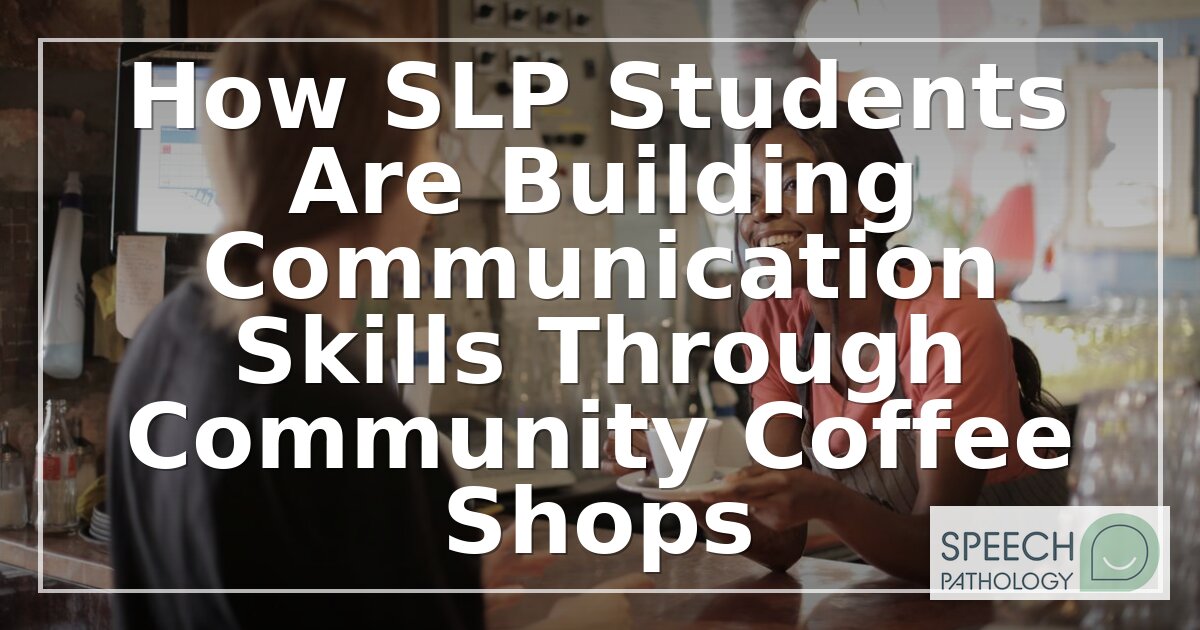
A four-week cooking class at Coffee Inclusive in Pittston, Pennsylvania, served as a clinical learning site for the University of Scranton's Distance Education Master of Science in Speech-Language Pathology program. The "Recipe for Connection" sessions paired graduate students with adults with intellectual and developmental disabilities to cook, converse, and solve problems together.
That setup replaces scripted clinic role-play with real-world social demands: waiting, taking turns, repairing misunderstandings, and adjusting language in a busy public space.
Community placements still require formal slp clinical supervision and clear learning objectives, but the model moves slp grad school curriculum into the environments where communication actually occurs.
Inside the Program: How the Coffee Shop Sessions Work
At Coffee Inclusive in Pittston, Pennsylvania, a coffee shop became an SLP clinical placement setting. The University of Scranton's Distance Education Master of Science in Speech-Language Pathology program ran a four-week summer cooking class called "Recipe for Connection." Graduate students in speech-language pathology were paired with adults with intellectual and developmental disabilities, moving therapy out of a sterile clinic and into a place where people already gather to talk, order drinks, and connect.
A Session Built Around Everyday Tasks
Each session centered on cooking activities rather than drill-based speech therapy exercises. A graduate student and a participant might read a recipe together, decide who would measure ingredients, or negotiate how to split steps like mixing and pouring. Those ordinary moments created repeated chances to practice communication, social interaction, and problem-solving. The setting mattered: standing at a counter, making eye contact, asking for help, and responding to unexpected changes in a recipe all became authentic communication opportunities.
Why the Coffee Shop Setting Worked
Instead of simulating a conversation in a treatment room, students guided real talk around a shared task. Participants described preferences, asked questions, and made choices. When a step went wrong, the pair had to problem-solve on the spot. By the end of the four weeks, every participant received a recipe book featuring the dishes they had made together, a concrete reminder of the skills they practiced and the relationships they built.
What Communication Skills Students Practice and Build
What specific communication skills do SLP students practice while cooking alongside adults with intellectual and developmental disabilities in a busy coffee shop?
At the Recipe for Connection sessions at Coffee Inclusive, graduate students work on pragmatic language targets in real time and count the experience toward their SLP clinical hours requirements. Turn-taking emerges when one person stirs while another adds ingredients. Students model waiting, responding, and shifting topics as the activity moves forward.
Pragmatic Skills in an Unscripted Setting
Unlike clinic role-play, a coffee shop brings interruptions, background noise, and unplanned customers. Students practice topic maintenance by asking follow-up questions about a participant's favorite foods or weekend plans. Requesting help sounds natural: "Can you pass the measuring cup?" or "Will you hold the bowl steady?" Commenting on a shared task, such as "The batter looks smooth now," reinforces joint attention and reciprocal exchange.
Problem-Solving Through Cooking
Sequencing steps is a core target. Students guide participants through a recipe order while helping them adapt when an ingredient spills or a timer goes off early. Verbal negotiation comes into play when two people want to do the same job or when a step is skipped. Students learn to offer choices, check for understanding, and repair breakdowns without taking over.
These skills tie directly to functional communication goals for adults with IDD: ordering at a cafe, working with peers, asking for help, and handling unexpected changes in everyday routines. The setting makes the targets feel real, not rehearsed, and builds confidence in SLP clinical placements.
Real connection matters because it turns therapy from scripted drills into shared experience. As Tara Carito puts it, the class "creates genuine opportunities for conversation, collaboration and meaningful human connection." That shift can make clinical skills feel more transferable to everyday life.
Supervision, Structure, and Clinical Oversight in Community Settings
Community settings like a coffee shop cooking class do not automatically count as clinical education. They become clinical placements only when a program formally builds in learning objectives, direct supervision, and documentation that meet ASHA clock-hour rules.
Who oversees the placement
At the University of Scranton, Tara Carito, the clinical education coordinator, is the person responsible for making sure an experience like Recipe for Connection qualifies as clinical training. Her role includes verifying that the site offers direct client contact, arranging real-time supervision, tracking student hours, and confirming the placement fits the graduate program's outcomes. Without that structure, the activity is closer to volunteer enrichment than a practicum.
What ASHA requires for community-based hours
ASHA requires 400 total clock hours for SLP certification: 25 hours of guided observation and 375 hours of direct client contact, with at least 325 hours at the graduate level. ASHA does not publish a fixed supervisor-to-student ratio for off-campus sites. Instead, it sets a supervision benchmark: at least 25% of each client's total contact must be directly supervised in real time. Direct supervision means the clinical educator is present or available in real time. Indirect supervision, such as reviewing a session recording later, can supplement but does not replace the required real-time percentage for direct contact. Only direct client or family contact for assessment, treatment, or counseling counts toward hours. Planning, setup, charting, and scoring do not. Documentation is essential: a program must record the type of direct contact, the amount and percentage of real-time supervision, and the student's performance.
Can a coffee shop program count toward clock hours?
Yes, but only if the program designates it as a clinical placement. The cooking class becomes countable when students deliver direct communication intervention, a clinical educator provides real-time supervision for at least 25% of each client's contact, and the program keeps supervision and clock-hour logs. If the experience is primarily observational, teaches cooking skills without SLP objectives, or lacks a signed clinical agreement, it is volunteer enrichment and should not be counted. The 2027 standards add a narrow option for up to 50 hours of non-clinical care management if a program opts in, but direct client contact remains the core requirement.
Interdisciplinary Collaboration: Beyond the SLP Classroom
Some SLP students learn teamwork from a clinic desk; others learn it in a school hallway or a community room. The second path pushes students to coordinate with professionals outside their own discipline, from occupational therapy and speech therapy collaboration to community support staff.
Two Summer Partnerships That Expand the Team
The University of Scranton's summer clinical experiences went beyond Coffee Inclusive. Students also partnered with the Scranton School for the Deaf and Hard of Hearing Children and the Waverly Community House. At a school for deaf and hard of hearing children, that can mean aligning communication goals with teachers of the deaf and classroom staff. At a community house, it can mean coordinating with disability service staff and program leaders, work that can overlap with community health SLP roles. In both settings, students begin with shared goals and a shared understanding of each partner's role.3 They figure out what each partner already knows, what each can reasonably do, and what the student can add.
Role Clarity, Communication, and Shared Documentation
Strong community-based SLP collaboration relies on role delineation and a mutually understood language.2 Rather than assuming everyone uses the same clinical terms, students clarify what "communication support" means in that site. Regular check-ins help. Meeting every four to six weeks, when appropriate, gives staff and students time to adjust.1 If disagreements come up, the process calls for timely, open conversation, not letting friction build.2 Shared documentation and co-planning keep everyone working from the same picture of the client's participation and needs.4
A Yearlong Arc of Team-Based Training
These summer experiences are not isolated. Scranton's graduate students continue clinical training in fall school-based placements and spring adult-based placements, a sequence that builds the range expected in SLP externships. That arc lets students practice relationship-building across different teams, educators in one term and adult service staff in another.3 In all settings, the same habits apply: listen first to learn partners' roles, bring concrete observations tied to communication and everyday participation, and adapt recommendations to the routines already in place.
It creates genuine opportunities for conversation, collaboration and meaningful human connection.
Why This Matters: Impact on Student Learning and Client Outcomes
What do SLP students actually gain from a coffee shop placement, a type of speech pathology internship, and do clients benefit as much as the students do?
In an unpredictable community setting, graduate students make clinical decisions in real time, building slp clinical placement quality. They adapt their language, adjust wait time, and model conversational turns without the controlled cues of a clinic room. Published community-based SLP learning initiatives describe similar gains: students report increased confidence communicating as speech pathologists, better active listening, and stronger ability to adapt their interaction style to the person in front of them.34 For students in a program like Recipe for Connection, that means building the clinical judgment to decide when to step in, when to pause, and when to let a shared task carry the conversation.
What the Client Gains
Adults with intellectual and developmental disabilities communicate in a familiar, low-pressure community cafe. That setting supports generalization, the transfer of skills from structured therapy to everyday life. While Scranton's specific cooking class has not been formally evaluated under that name, comparable community placements show the pattern. One pediatric community placement study reported children met 60 percent of their intervention targets1, and a rural SLP placement model found 83 percent of children did not need ongoing support after the placement.2 These are different populations and settings, but they point in the same direction: community practice can make communication gains stick.
Rapport, Generalization, and Functional Communication
A coffee shop naturally builds rapport because the interaction feels social, not clinical. Students learn to support functional communication across settings, not just target drills. Faculty reflections from community-based SLP education emphasize personal and clinical skill development, advocacy, and social engagement as core outcomes.4 That blend is exactly what a graduate clinician needs before entering school and adult placements.